
Salepur, Nov 6 (UDN): As Odisha prepares to celebrate Diwali, an age-old tradition of paying homage to ancestors is facing an unexpected challenge. Kaunria sticks, an essential part of the state’s traditional Badabadua Daka ritual, are becoming increasingly difficult to find in local markets, with declining cultivation pushing up prices ahead of the festival.
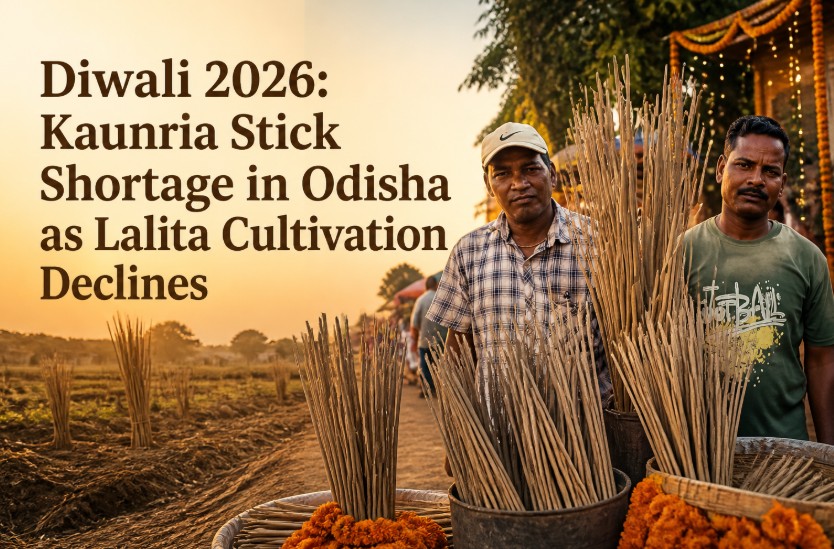
Representational Image
Every year on Diwali, Odia families observe the Badabadua Daka tradition by lighting ghee-soaked wicks attached to Kaunria sticks. Holding the burning sticks towards the sky, devotees offer prayers to their ancestors and seek their blessings for the family’s well-being and prosperity.
However, this year’s festive preparations have been overshadowed by a shortage of Kaunria sticks, largely attributed to the gradual decline in the cultivation of Lalita, the traditional crop used to produce them.
Kaunria stick prices surge amid supply shortage
The shortage has begun to affect local markets, with prices witnessing a noticeable increase. In Salepur of Cuttack district, a bundle of Kaunria sticks is reportedly selling for Rs 100, while five individual sticks are priced at Rs 10.
With local availability shrinking, traders are travelling from areas such as Kendrapara, Marshaghai and Tirtol to different villages to procure the sticks directly from farmers.
After purchasing the produce and covering transportation expenses, these traders bring the sticks to Salepur for sale. The additional procurement and transportation costs have further added to the financial burden on traders and consumers.
Declining Lalita cultivation raises concerns
The growing shortage has brought attention to the steady disappearance of Lalita cultivation, which once provided farmers with an additional source of income.
In the past, cultivating this traditional crop was considered economically beneficial, as farmers could earn from both jute and Kaunria sticks. However, changing agricultural practices and the gradual decline in cultivation have reduced its availability in recent years.
As a result, procuring even a single bundle of Kaunria sticks has become increasingly difficult, particularly during the peak festive season when demand rises sharply.
Farmers seek government support to revive traditional crop
The shortage has raised concerns not only among traders and consumers but also among those dependent on the crop for their livelihood.
Farmers believe that appropriate government intervention, financial assistance and incentives could encourage the revival of Lalita cultivation. Such support, they say, would help improve farmers’ income while ensuring a steady supply of Kaunria sticks in local markets.
The issue has also highlighted the need to protect traditional agricultural practices that are closely connected with Odisha’s cultural identity.
An age-old Odia tradition faces an uncertain future
For generations, Kaunria sticks have held a special place in Odisha’s Diwali celebrations. The Badabadua Daka ritual is deeply rooted in the state’s cultural and spiritual traditions, making the sticks more than just a seasonal agricultural product.
With their availability declining and prices rising, the future of this traditional practice has become a growing concern.
As Diwali approaches, the shortage serves as a reminder that preserving cultural heritage also requires protecting the traditional farming practices and livelihoods that sustain it.
Reviving Lalita cultivation could therefore serve a dual purpose: supporting farmers economically and ensuring that future generations continue to celebrate one of Odisha’s most cherished Diwali traditions.