

Nov 09: One of the strongest El Niño events on record could peak towards the end of 2026. Cam Bolton-Wilson, Vice President of Government & Humanitarian – Americas at Chapman Freeborn, explains how severe weather disrupts humanitarian supply routes, what can be planned in advance and why aviation decisions made only after a crisis begins may already come too late.
The World Meteorological Organisation expects El Niño to reach very strong intensity before peaking towards the end of 2026 and to persist into early 2027. The resulting droughts, floods and crop damage could push 49 million more people into acute food insecurity, bringing the total to 274 million across 45 countries by the end of 2027, according to the World Food Programme.
For humanitarian aviation, the main concern is how many crises could unfold at the same time. Flooding in the southern United States, fire risk across the Amazon and food emergencies on several continents could all draw on the same pool of suitable aircraft, airport capacity and specialist resources. Aid agencies increasingly act on forecasts like these, and with good reason – WFP estimates that every US$1 invested in anticipatory action can result in up to US$7 in avoided losses.
From forecast to flight plan
Knowing that a storm is coming is useful, but planners need to know what it will do to the places aid has to pass through. Can the nearest airport stay open? Will aid be able to move onward from there, and how many people depend on the route in question?

“Forecasts give us a window to get our plans in order before we lose access,” Bolton-Wilson says. “If you start planning once that has already happened, it’s a race against the clock with far fewer options.”
What can be planned before a crisis
According to Bolton-Wilson, more can be done in advance than many organisations realise. Aircraft options, alternative airports, regional staging locations, operating permissions, indicative costs and mobilisation procedures can all be assessed before an emergency. Documenting these assessments also helps organisations justify early investment of time and resources.
One option Chapman Freeborn is currently assessing is a retained aviation readiness arrangement. Such a model could combine data-driven risk monitoring with aviation specialists supporting an organisation’s crisis management team remotely. If developed, this approach could allow commercial terms and activation procedures to be agreed in advance, while keeping the final aircraft selection, routing and deployment timing flexible as conditions develop.
Common planning mistakes
Securing an aircraft does not mean the logistics problem has been solved. Aid still depends on permits, ground handling, fuel, functioning local infrastructure and transport waiting at the destination. Conditions can also remain unpredictable for hours or days after the immediate event has passed.
Planning is further complicated by regional conflicts and airspace closures, which can force longer routings and increase operating costs. Humanitarian flights already face limited budgets, while fuel shortages and sharp fluctuations in jet fuel prices can make urgent operations even more difficult to fund and execute.
Another common pitfall is the tendency to wait for absolute certainty. For example, early warning systems had flagged a likely food crisis in the Horn of Africa in August 2010. However, substantial response only started in July 2011, once famine had been officially declared in Somalia. A report published by Oxfam and Save the Children concluded that risk aversion had delayed the effort by six months.
While anticipatory action is becoming more common across the humanitarian sector, aviation is still often treated as a reactive procurement need. Bolton-Wilson believes it should be integrated into preparedness planning from the beginning.
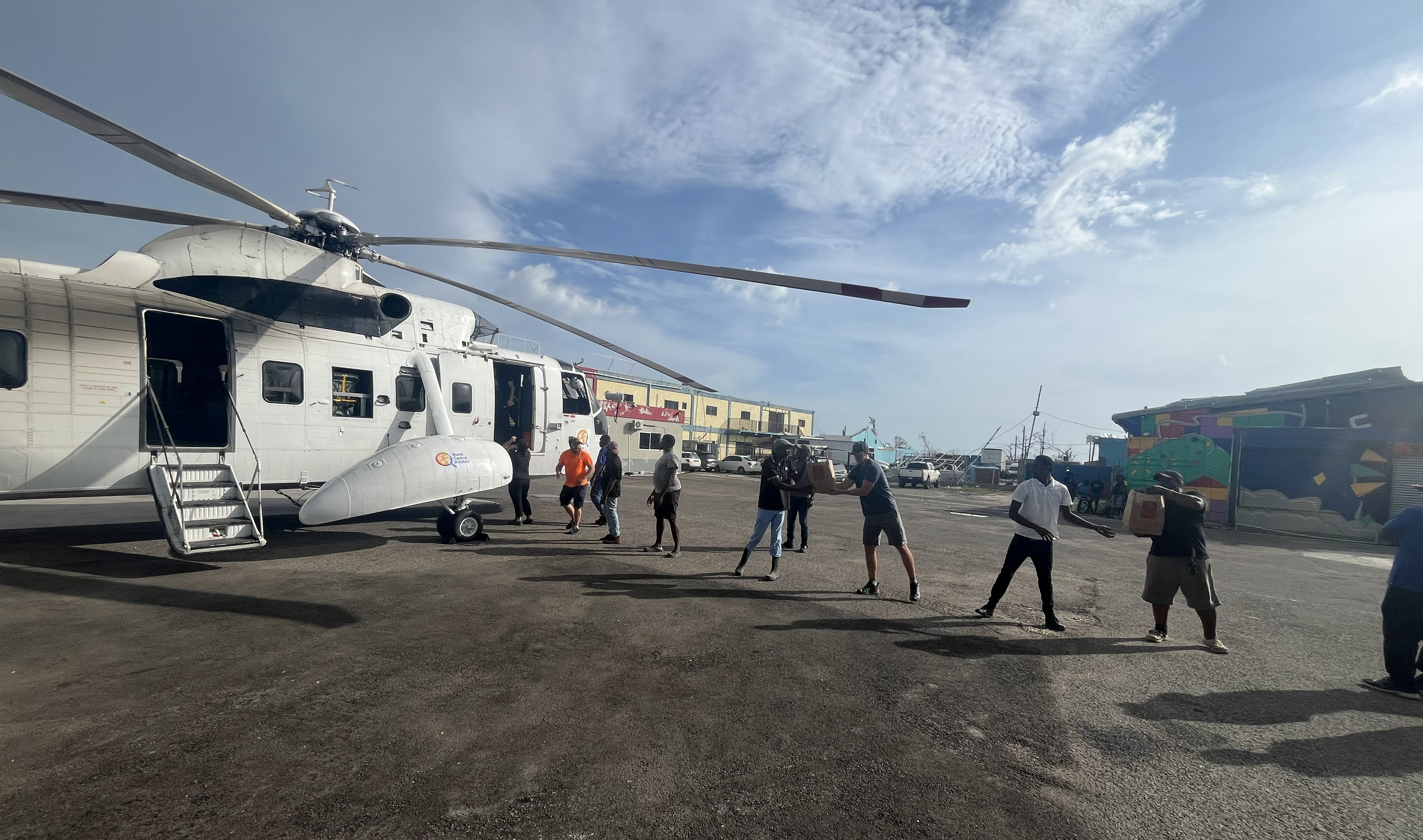
When Hurricane Melissa approached Jamaica in October 2025, Chapman Freeborn began preparing before the storm made landfall. The team checked aircraft availability in the region and adapted the response as conditions developed. The operation ultimately involved fixed-wing flights for personnel, specialist helicopters and an Antonov AN-12 carrying critical communications equipment.
“The key was sourcing the right aircraft for each stage,” Bolton-Wilson says. “The AN-12 proved particularly useful because it loads from the rear and carries its own cargo-handling equipment, giving the team greater flexibility at airports already under strain.”
The last few miles
It is often easier to get aid into a country than to move it from the airport to the communities that need it. An aircraft may land on schedule, but damaged roads, fuel shortages, limited handling equipment or a lack of onward transport can prevent the cargo from reaching its destination.
A well-documented example of this is the Haiti earthquake relief in 2010, when aircraft carrying half of a Norwegian field hospital landed in Port-au-Prince, whereas the other half got diverted to the Dominican Republic and had to be transported over mountainous terrain, delaying the opening of one of Haiti’s first post-quake field hospitals.
“Humanitarian airlift works best when the whole journey is planned together, from the first flight into the country to the final delivery. A widebody freighter may establish an international air bridge, while regional aircraft, helicopters or potentially unmanned cargo platforms support onward distribution. Our team is also assessing how emerging air mobility technologies could reach isolated communities, deliver low-volume, high-impact goods such as medicines and improve situational awareness,” Bolton-Wilson says.
Scheduled flights or charter?
Whether scheduled flights will do or a charter is needed depends on the mission, Bolton-Wilson says. Planners must consider how quickly the goods are needed, their size and handling requirements, whether the destination can still accommodate aircraft and how long the response is likely to continue.
If scheduled services cannot provide the necessary speed, reliability, flexibility or reach, a dedicated charter may become the more suitable option. A large response may combine commercial services, dedicated freighters, passenger aircraft carrying relief personnel and helicopters rather than relying on a single solution. These operations work best when every requirement is coordinated by one team, allowing each flight to be planned as part of the wider response rather than as an isolated movement.
Local reach and integrated airlift
Building an effective response requires both local knowledge and central coordination. A globally distributed aviation services organisation with offices in or near potentially affected regions can assess airport conditions, permits, ground handling, fuel and onward transport as circumstances change.
Brokerage experience adds value by turning separate capacity options into an integrated airlift solution. Experienced brokers can determine how scheduled services, dedicated charters, passenger aircraft, helicopters and other modes should work together across different stages of the response, rather than treating each movement as an isolated flight.
What to do before El Niño peaks
With El Niño expected to peak within months, what should organisations be doing now? Bolton-Wilson’s advice is to move from monitoring to preparation. Organisations can start by mapping the regions most at risk and checking the transport links into them. From there, they can review the stocks already in place and work through aviation scenarios for the needs most likely to arise.
Timing matters more than usual this season. If emergencies hit several regions at once, suitable aircraft, airport capacity and specialist staff could quickly run short. One option Chapman Freeborn is currently assessing is a retained aviation readiness arrangement, with commercial terms and activation procedures agreed in advance while aircraft and routes remain flexible.
“A forecast gives you time. We want to help our partners use that time well, so that when the need becomes clear, the right aircraft can be on its way as quickly as possible,” Bolton-Wilson says.